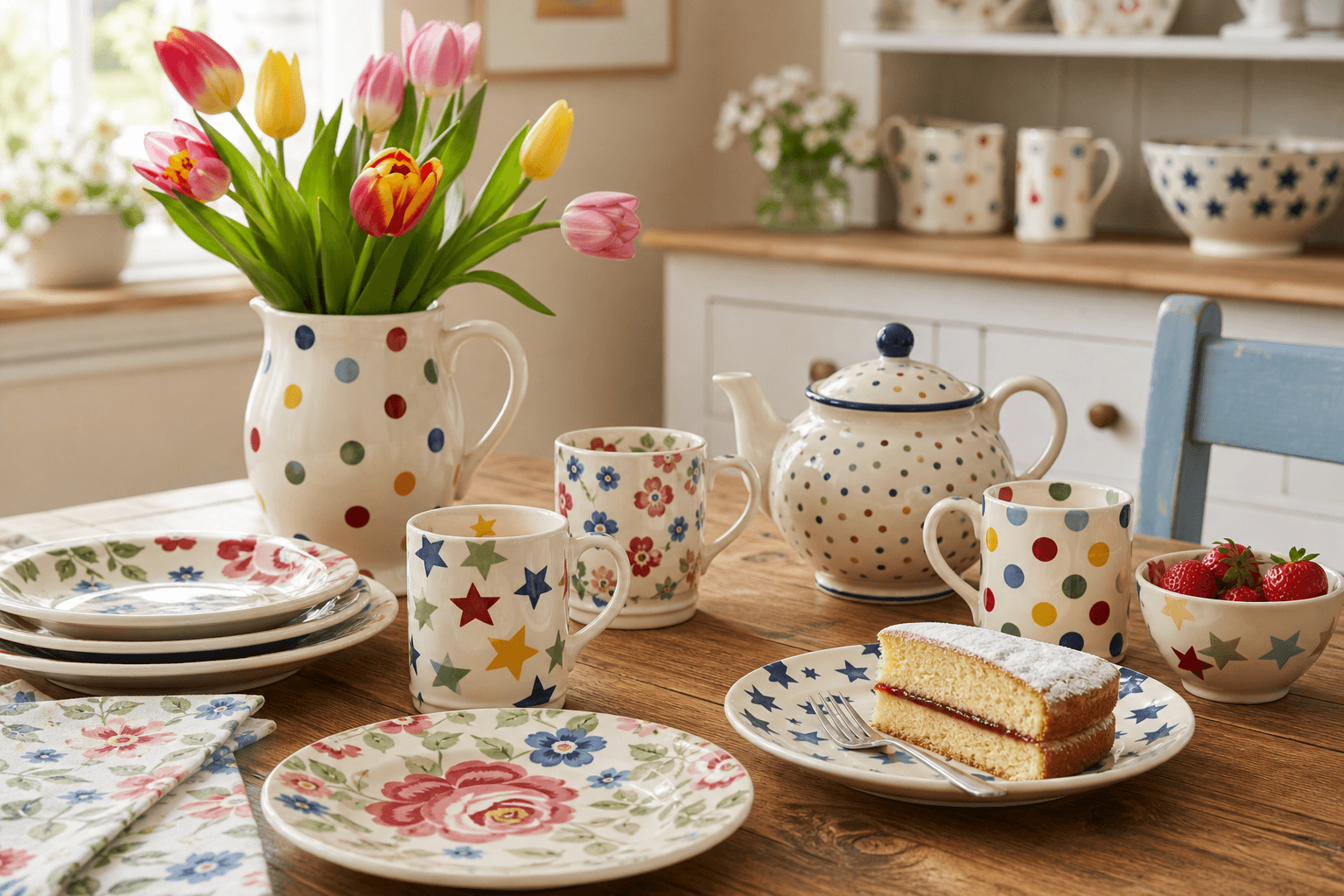
Why pottery still matters
Well-made pottery pulls double duty in the home and garden category: it earns its keep at the table every day while also adding warmth and pattern to shelves, sideboards, and cottage-style kitchens. If you’re choosing mugs, plates, and serving pieces for breakfasts, tea breaks, or weekend suppers, a little knowledge about materials, shapes, and surface decoration will help you pick pieces that suit your routines as well as your style. The distinctive, hand-decorated look associated with British makers—playful dots, bright florals, and bold typographic motifs—is beloved because it mixes easily from season to season and never feels too formal for a weeknight. That quality is central to the appeal of the collections you’ll find from Emma Bridgewater, whose designs are often chosen to build a cohesive but characterful set over time rather than in one go. If you’re browsing patterned mugs and breakfast bowls, start at emmabridgewater.co.uk, where the range typically spans everyday essentials alongside giftable one-offs. The key is to think about how each item will be used before you fall for a pattern. Do you drink more filter coffee than tea? A taller mug with a comfortable handle might be your everyday hero, while a wide-bowled cup better suits latte drinkers who like generous foam. For morning porridge, a medium bowl with a rounded interior is easier to spoon from than a sharply angled one; for salads, a wider, shallower bowl lets greens breathe. Consider weight as well: earthenware has a pleasing heft that keeps hot drinks warmer for longer, but extremely thick walls can feel cumbersome for small hands. Look for a balance between solid feel and comfortable handling, especially if the piece will be carried between kitchen and garden seating. Glaze and decoration matter for both longevity and look. A smooth, continuous glaze over the rim and base edge reduces the chance of rough spots that can scuff shelving or trap stains. Because many patterns are applied by hand, small variations in spacing or color intensity are normal and part of the charm; decide whether you like that artisanal character across a shelf or prefer a more uniform visual rhythm. Finally, think about how new pieces will live with what you already own. If your cupboards are a patchwork of neutrals and soft blues, picking a pattern that repeats one of those tones will tie the whole collection together. If you love contrast, choose one accent color—say tomato red or inky navy—and let it echo across mugs, jugs, and a serving plate to create a simple, satisfying story on the table. Small kitchens benefit from stackable shapes and consistent diameters that nest neatly; open shelving rewards pieces with strong silhouettes and a tidy foot ring that sits flat. If you entertain outdoors, look for serving platters that are easy to carry and bowls with rims you can grip securely. Seasonal motifs can be charming for holidays, but choosing a main set in a perennial pattern and layering in a few festive pieces avoids storage strain while keeping your table fresh through the year.
Materials, finishes, and uses
It helps to understand the basics of ceramic materials when comparing patterned pottery for daily use. Earthenware—the material long favored for British kitchenware—has an inviting, slightly softer feel than many stonewares or porcelains. It takes richly colored decoration beautifully and delivers that homely heft people often associate with a comforting cup of tea. Because it is typically glazed to seal the surface, evaluate how evenly the glaze covers rims, handles, and foot rings; continuous coverage feels smoother in the hand and can make pieces easier to clean. Stoneware tends to be denser and often reads a touch more modern; porcelain is usually lighter and more translucent. If you’re mixing with items you already own, it’s perfectly fine to combine materials, but keeping a consistent overall silhouette (for example, rounded profiles) prevents a mismatched look from feeling chaotic. Capacity and shape matter as much as pattern. Mugs are commonly described by volume; check the listed capacity and think about how it matches your habits. If you sip slowly and prefer smaller pours, a compact mug reduces the chance of your drink cooling too quickly; if you top up frequently, a taller profile may be better. Bowls vary by depth and slope—rounded interiors help with oatmeal and soups, while wide, open bowls suit pasta or shared sides. For plates, look for side plates around the low-20s in centimeters for snacks and desserts, and dinner plates in the mid-to-high 20s for most meals. Serving pieces benefit from comfortable grip points: an ample rim or a handle makes it easier to carry from kitchen to patio. Practicalities are straightforward but worth noting. Always follow the care guidance provided with the specific piece, especially where metallic detailing is present or where temperature changes are a factor. To avoid thermal stress, let hot dishes cool a little before rinsing, and avoid moving items directly from a hot oven or very warm environment to cold water. Glaze colors can vary slightly between production runs; this is normal with hand-applied patterns and is part of their charm. If you prefer visual consistency, consider buying multiples from the same batch or in a single order. When you’re planning a collection, you can explore offers on sets and singles to build gradually without committing to everything at once. Finally, mixing patterns is easier if you limit your palette to two or three anchor colors. Dots, stars, and florals tend to harmonize when at least one color repeats. Typography and bolder geometrics pair well with small-scale ditsies because they create contrast without competing. Place one quiet, neutral element—plain cream plates or a simple jug—between busy designs to give the eye a rest and keep your table looking intentional rather than cluttered.
Care, storage, and buying tips
A few simple habits will keep patterned pottery looking its best. For everyday cleaning, use warm water and a mild detergent with a soft cloth or non-abrasive sponge; give pieces a little space in the dishwasher so they don’t knock together. Avoid harsh scouring powders on decorated areas, and steer clear of bleach-based products that can dull a glaze’s appearance over time. If you notice faint gray lines from cutlery on plates (a common occurrence with most glazed ceramics), a gentle, non-abrasive cleaner formulated for tableware can often lift them without harming the decoration—always test on a discreet spot first. To minimize the chance of chipping, don’t nest heavy bowls too tightly; felt separators or paper towels between stacked plates protect rims when cupboard space is tight. Storage matters as much as washing. Check shelf depth before buying larger platters; a few millimeters can determine whether a piece sits safely behind a cabinet door. Plate racks, peg boards, and shelf risers help you display frequently used pieces while keeping them accessible. If your kitchen gets strong afternoon sun, store richly decorated items away from direct light to preserve their fresh look. For households that like to dine in the garden, designate a carry-all tray or crate so mugs and bowls travel together, and place a small cloth between each to avoid clinks on the walk outside. When building or refreshing a collection, start with a core that covers daily needs—a couple of mugs per person, cereal/soup bowls, and plates you’ll use most evenings. Live with those for a week to confirm comfort and capacity, then add a jug, serving bowl, or platter that bridges your patterns. Ordering a single piece first is a smart way to check handle fit, weight, and how the colors read in your lighting. If you’re gifting, think about the recipient’s rituals: a compact mug for an espresso fan, a sturdy handled bowl for someone who eats on the sofa, or a statement platter for a frequent host. Many brands periodically offer personalization or limited motifs; for current availability, check the maker’s policies on the official site. Finally, shop mindfully: measure shelves, note how many pieces fit comfortably, and track what you actually reach for each week. A focused palette and a few high-utility shapes do more for daily life than a crowded cupboard. With thoughtful choices and simple care, your pottery will serve family meals, casual teas, and garden gatherings with equal ease.
Key takeaways and next steps
Choosing patterned pottery for home and garden living is about balancing friendly, everyday function with quietly uplifting design. Start by thinking through routines—your drinks, favorite breakfasts, how often you host—and pick shapes that support those moments comfortably. Earthenware offers inviting warmth and weight; check rims, handles, and glaze coverage so pieces feel smooth, sturdy, and easy to clean. Match capacity to habit, and let a limited palette pull mixed patterns together so your shelves and table look cohesive. Practical care goes a long way: rinse gently, avoid harsh abrasives, space pieces in the dishwasher, and protect stacked rims with soft separators. Plan storage as carefully as purchasing so platters, bowls, and mugs fit the cupboards you have and travel safely to the garden when the weather is kind. When it’s time to buy, build from a dependable core—mugs, bowls, and plates you’ll use daily—then layer in serving pieces and seasonal accents that make your table feel personal. If you’re shopping online, review item-specific care notes, check dimensions against your shelves, and start with a single piece to evaluate color and comfort at home. Collections from makers like Emma Bridgewater are designed to be collected over time, so there’s no rush; enjoy the process of mixing prints, scaling up for gatherings, and letting your kitchen tell its own story through patterns you love.